
Baileys GB Retweeted
Tickets on sale NOW to our cocktail evening- free hair, makeup & brow treatments included!
http://on.cosmo.uk.com/1MyycYz
Stop all alcohol advertising
Baileys GB Retweeted
Tickets on sale NOW to our cocktail evening- free hair, makeup & brow treatments included!
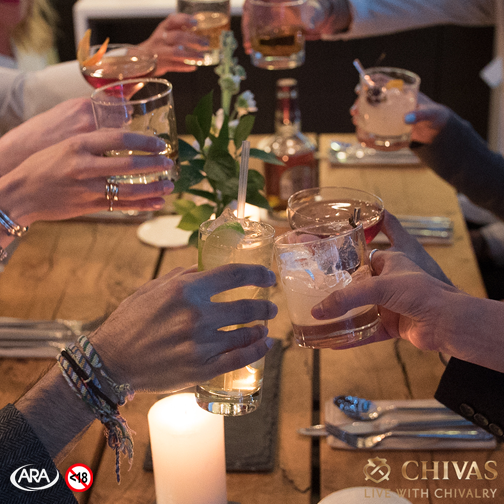
Celebrate good moments with friends. Celebrate great moments with friends and a round of Chivas.
Information and advice for mothers-to-be who have questions about alcohol during pregnancy.
When you’re pregnant it can seem like you are being bombarded with information.
There are hundreds of leaflets, books, magazines and websites all about what to do and not to do for the next nine months of your life. Sometimes it’s hard to know where to go for trustworthy advice. This is especially true when it comes to knowing how much you can drink when you’re pregnant.
Read on to cut through the confusion and find out the key truths about alcohol and pregnancy.
The Department of Health recommends that pregnant women, or women trying for a baby, should avoid alcohol altogether.
If they do choose to drink, to minimise risk to the baby, the government’s advice is to not have more than one to two units of alcohol once or twice a week, and not to get drunk.
The National Institute for Health and Clinical Excellence (NICE) is the independent organisation responsible for providing national guidance on promoting good health and preventing and treating ill health.
NICE additionally advises that the risks of miscarriage in the first three months of pregnancy mean that it is particularly important for women not to drink alcohol at all during that period (1). However, it is important to understand that drinking should be kept within the recommended guidelines throughout the whole pregnancy, not only for the first three months.
Scientists aren’t sure about the precise impact drinking small amounts of alcohol can have on unborn babies. They do know, however, that high alcohol consumption can be harmful during pregnancy (2).
So, you might decide that the safest option for you is to avoid alcohol for nine months. Of course, it’s your body and your choice.
If you do decide to drink when you’re pregnant, it is extremely important that you know what a unit of alcohol actually is. For example, a standard glass of 175ml wine contains more than two units. The government’s lower risk guidelines recommend that men do not regularly exceed 3-4 units a day or 2-3 units a day for women.
Drinking any more than one to two units once or twice a week means you could be putting your baby’s health at serious risk.
When you drink, the alcohol crosses from your bloodstream through the placenta directly into your baby’s blood. How a baby will be affected depends on how much its mother drinks and the mother’s metabolism. Evidence suggests that diet is also important, with poor maternal nutrition increasing the risk of harm to the unborn baby.
The potential harms of alcohol to a baby will also depend on the point during pregnancy at which it is consumed. However, alcohol can have a harmful effect on your baby’s development at any stage. It is therefore important to stick to the guidelines throughout your pregnancy.
Are you breastfeeding? Get some advice…
The more you drink the greater the risk you are taking with your baby’s health.
Miscarriage, stillbirth, premature birth, small birth weight, and Foetal Alcohol Spectrum Disorder (FASD) are all associated with a mother’s binge drinking – consuming more than six units on one occasion whilst pregnant.
What is Foetal Alcohol Spectrum Disorder (FASD)?
Official government guidance advises that if you’re trying to have a baby, you should stop drinking. This is to protect the baby in case you’re pregnant and don’t realise it.
However, alcohol doesn’t cause problems only once you are pregnant. There is good scientific evidence that alcohol can reduce fertility in both men and women (4) (5). It’s another reason why, if you’re trying to have a baby, both you and your partner might want to cut back on drinking.
Drinking over the guideline amounts also puts you at higher risk of miscarriage during the first trimester. A large study found a more than three times increased risk of miscarriage in women drinking just five or more units per week (6).
Here are three ways to keep your drinking under control if you’re pregnant or trying to have a baby.
Your GP can help you figure out if you should make any changes to your drinking, and offer help and advice along the way. Or talk to your midwife about alcohol and pregnancy.
You can find more information on the importance of having a healthy diet during pregnancy on the NHS Choices webpage.
If you’re concerned about someone’s drinking, or your own, Drinkline runs a free, confidential helpline. Call 0300 123 1110.
For more information and advice on Foetal Alcohol Syndrome, go to the National Organisation on Foetal Alcohol Syndrome UK’s website http://www.nofas-uk.org or call their helpline on 020 8458 5951.
 Download this page as a printable factsheet »
Can drinking alcohol really change your chances of getting cancer?
Unfortunately, the consequences of drinking too much alcohol can be far worse than a nasty hangover and hazy memories of bad dancing and inappropriate comments.
Regularly drinking to excess can increase your risk of serious illnesses, such as cancer.
In the UK in 2011 around 4,100 people died of liver cancer, that is 11 people every day (3).
Find out more about how alcohol can cause liver disease.
Of course, not everyone who drinks will get cancer. But scientists have found that cancer is more common in people who drink alcohol than those who don’t.
Drinking alcohol regularly can increase your risk of (2):
Heavy drinking can cause cirrhosis of the liver (where damage to the liver causes scar tissues to build up) which can then lead to cancer.
In 2010 there were 3,789 deaths from liver cancer in the UK (3).
Recent studies have shown that even small amounts of alcohol can increase the risk of bowel cancer. An ongoing study of 500,000 people in 10 European countries has found that for every two units drunk a day, your risk of bowel cancer goes up by 8% (4).
Throw cigarettes into the mix when you’re drinking and you increase the damage caused to your body’s cells.
Smoking and drinking together greatly increases your risk of developing throat and mouth cancer than doing either on their own. That’s because when you drink alcohol it’s easier for the mouth and throat to absorb the chemicals in tobacco that cause cancer.
It’s true with oesophageal (gullet) cancer. One study found that people who drank up to five units of alcohol and smoked up to eight cigarettes per day could increase their risk of oesophageal cancer between 13 (for men) and 19 times (for women) (5).
There are lots of debates about low levels of certain alcohol being good for us, such as red wine. However, it’s the alcohol itself that does the damage to our bodies and increases our risk of diseases such as cancer. It doesn’t matter what form alcohol comes in: beer, wine, or spirits, they all put our long-term health at risk.
The more you cut down on alcohol, the more you reduce your risk of developing cancer (6). Heavy drinking also causes: heart disease, stroke, high blood pressure, stomach ulcers, pancreatitis and, of course, injuries.
But there is some good news. Cut down on alcohol and the risk of developing cancer recedes quickly. A study has shown that the risk of mouth and oesophageal cancers drops dramatically in heavy drinkers who stop drinking (7).
Need some help? Get tips on how to cut down
Along with cutting down on the amount you drink, eating well and exercising are key to staying healthy. Eating at least five portions a day of fresh fruit and vegetables can have a protective effect against cancer, especially mouth, throat, stomach and lung cancers. Just 30 minutes of moderate activity a day, five days a week, can have a positive effect on your health. It isn’t just good for your heart – research has shown that it can also reduce the risk of developing breast, bowel or womb cancer. Keeping active could help to prevent more than 3,000 cases of cancer every year in the UK (8).
Scientists don’t know exactly why alcohol increases the risk of developing cancer. But here are some of the potential reasons (9):
Acetaldehyde
When you drink, the alcohol in your body is converted into a toxic chemical called acetaldehyde. This can damage your DNA and stop your cells from repairing that damage, which can lead to cancer.
Oestrogen and other hormones
Alcohol can increase the levels of some hormones, such as oestrogen, testosterone and insulin. The risk of some forms of breast cancer, for example, can be increased when there are unusually high levels of oestrogen.
Liver cirrhosis
Cirrhosis of the liver, a result of heavy drinking, makes you more vulnerable to liver cancer.
Folate
Alcohol drinkers tend to have lower levels of folate, an important vitamin that helps our cells produce new DNA correctly. Some studies have found that cancer is more common in people with low levels of folate in their blood.
Drinking within the lower risk guidelines will help you keep your drinking under control. Here are three ways you can cut back:
Your GP can help you figure out if you should make any changes in your drinking, and offer help and advice along the way.
If you’re concerned about someone’s drinking, or your own, Drinkline runs a free, confidential helpline. Call 0300 123 1110.
For advice on cancer-related issues, visit CancerHelp UK – http://www.cancerhelp.org.uk – the patient information website of Cancer Research UK. Their helpline operates 9am–5pm, Monday–Friday. Call 020 7061 8355 or freephone 0808 800 4040.
It may sound a bit sexist, but it’s simple biology.
The government advises that people should not regularly drink more than the lower risk guidelines of 3-4 units of alcohol for men (equivalent to a pint and a half of 4% beer) and 2-3 units of alcohol for women (equivalent to a 13% ABV 175 ml glass of wine).
Women are advised to drink less because, in general, their bodies don’t process alcohol as efficiently as men’s.
Women start to have alcohol-related problems at lower drinking levels than men do. They tend to absorb more alcohol and take longer to break it down and remove it from their bodies. So, when drinking equal amounts, women will have higher alcohol levels in their blood than men, and the immediate effects happen quicker and last longer.
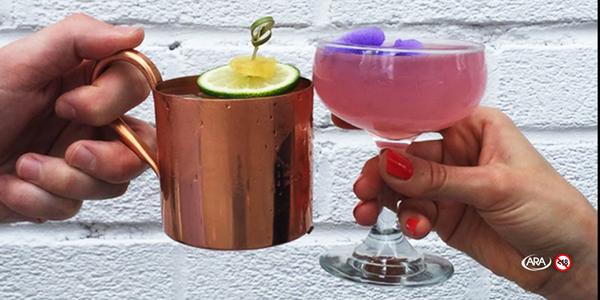
A new week means a new source of inspiration. What will inspire you to
#BeAbsolut this week?

A
#ShakenNotStirred Belvedere martini with@SigmanStephanie. Excellent choice, Mr. Bond. http://bit.ly/SPECTRE_Belvedere …

Which one will you crack open while the
#Boks beat Wales tonight?

mirnoff Retweeted
Introducing video for ‘Give it To The Moment’ a collab w/
@Kiesza@djembadjembaa#WHATWEBRING http://smir.nf/WWB

It’s getting chilly in
#Glasgow. Find our frozen apple tree on Buchanan St &#BreakTheIce to win Magners prizes…
 Cosmopolitan UK
 Sound Collective
  Mindaware